What is the biggest risk in a no-KYC gateway?
The biggest risk is misunderstanding the provider’s role. If a provider controls funds, converts assets, or sends bank payouts, the risk profile is different from a tool that only generates an invoice and observes a wallet payment.
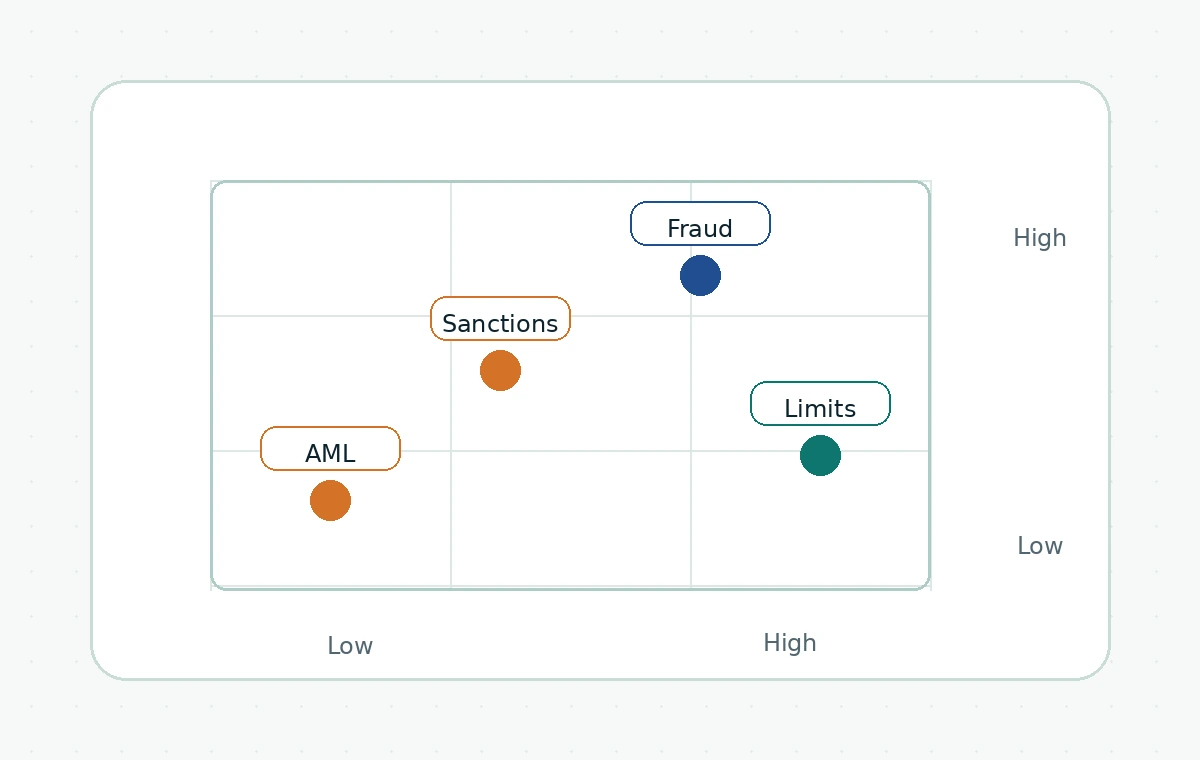
| Risk | Trigger | Merchant control |
|---|---|---|
| Custody risk | Provider holds or delays funds | Prefer direct settlement or clear custody terms |
| Sanctions risk | High-risk wallet, geography, or customer pattern | Use documented escalation and screening policy |
| Refund risk | Customer paid wrong amount or chain | Write refund workflow before launch |
| Tax record risk | Missing fiat value or order link | Export txid, timestamp, asset, amount, USD value |
| Provider limit risk | Volume, asset, or geography threshold reached | Read policy and test limits early |
Why do sanctions risks matter without customer KYC?
Sanctions risk can attach to wallet activity, geography, counterparties, or transaction patterns. OFAC guidance for the virtual currency industry frames sanctions compliance as risk-based rather than dependent on a single checkout field.
The FATF targeted update on virtual assets and VASPs is useful context for merchants because it shows why virtual-asset controls are assessed through roles, risks, and transfer arrangements, not only through marketing terms like no-KYC or privacy-first.
Why do refund risks matter?
Crypto settlement is usually irreversible, so refund rules need to be written before launch. A merchant should define when it refunds, which asset it uses, how it handles network fees, and how it verifies the original order.
How can merchants reduce risk without collecting unnecessary data?
The best approach is data minimization plus useful records. Collect only what the order needs, but keep the payment evidence required for support, accounting, and exception review.
FAQ
Does no-KYC mean no sanctions risk?
No. A short checkout form does not remove sanctions exposure tied to wallets, geographies, counterparties, or transaction behavior.
What is the safest first asset list?
There is no universal list, but many merchants start narrow to keep reconciliation and support manageable.
What makes a provider claim risky?
A claim is risky when it does not explain custody, limits, payout rules, jurisdiction scope, or exception handling.