Non-KYC crypto payment gateway as a merchant checkout model.
US merchant resource · updated July 2026
Crypto Payment Gateway Without KYC: What Merchants Can Actually Use
A crypto payment gateway without KYC can reduce buyer data collection when settlement is non-custodial or direct to a merchant wallet. It does not remove merchant records, tax treatment, sanctions exposure, refund planning, or legal analysis.
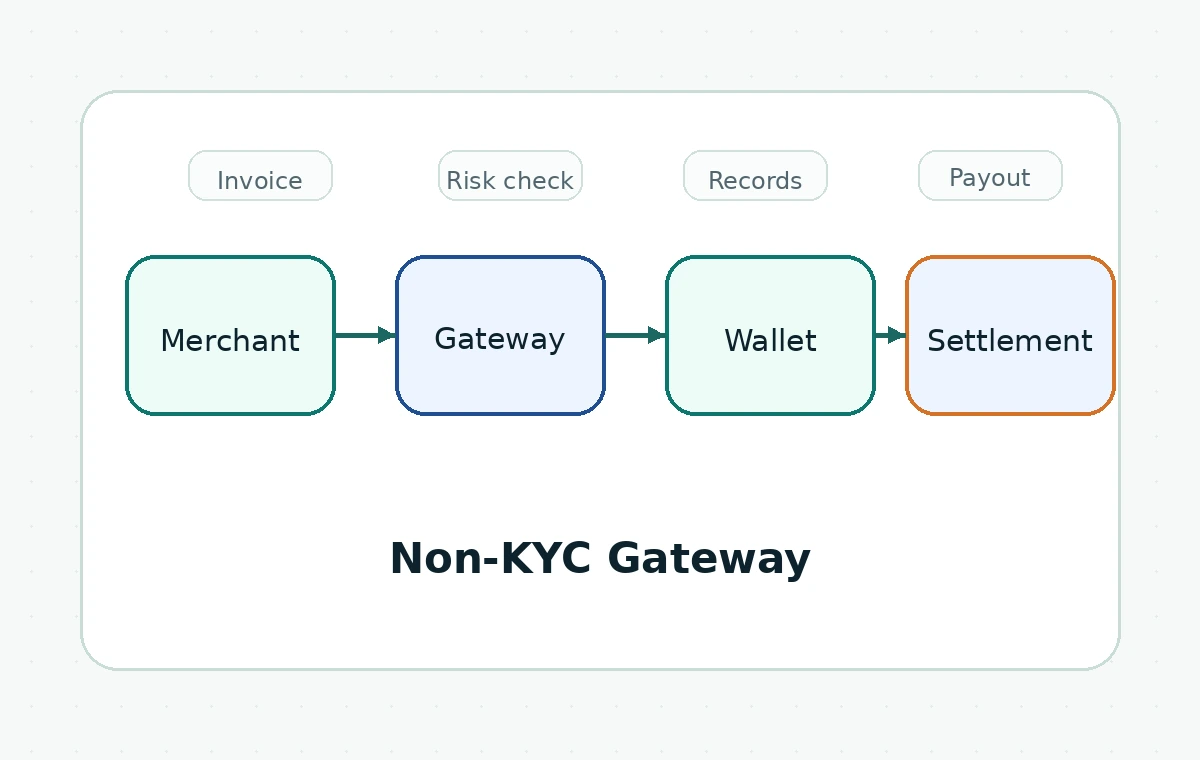
Custody, fiat payout, records, and risk controls matter more than the marketing label.
Start with limited assets, direct settlement, clear refunds, and accounting exports.
A crypto payment gateway without KYC usually means a wallet-based checkout where the buyer is not asked to upload identity documents before paying. Merchants comparing options often begin with lists of best crypto gateways for mechants, but the real review should separate buyer checkout friction from custody, payout, records, and sanctions risk.
This guide uses “without KYC” in a narrow checkout sense. The phrase can describe minimal buyer data collection, not a free pass to ignore merchant onboarding, AML facts, tax records, refunds, or jurisdiction-specific rules. In payments, a small label can hide several different business models.
What does a crypto payment gateway without KYC mean?
A crypto payment gateway without KYC means the customer can usually complete a crypto payment without submitting identity documents during checkout. The central entity is the non-KYC checkout model; the supporting entities are custody, settlement, invoice records, supported assets, sanctions exposure, and merchant accounting.
KYC is identity verification. AML is broader: suspicious activity handling, recordkeeping, escalation, and risk controls. A checkout may avoid collecting the buyer’s passport while still requiring the merchant to know what was sold, when payment arrived, which wallet received it, and what the fiat value was at the time of payment.
FinCEN guidance on convertible virtual currency says regulatory treatment depends on facts and circumstances and that labels used by industry are not decisive. That is why the same “gateway” word can mean software, hosted invoices, custody, conversion, or money transmission depending on what the provider actually does.
Which gateway models can reduce buyer verification?
The models most likely to reduce buyer verification are self-hosted or non-custodial gateway models where the merchant receives payment directly. Custodial processors and fiat payout providers are more likely to add merchant verification, transaction review, withdrawal limits, or account controls.
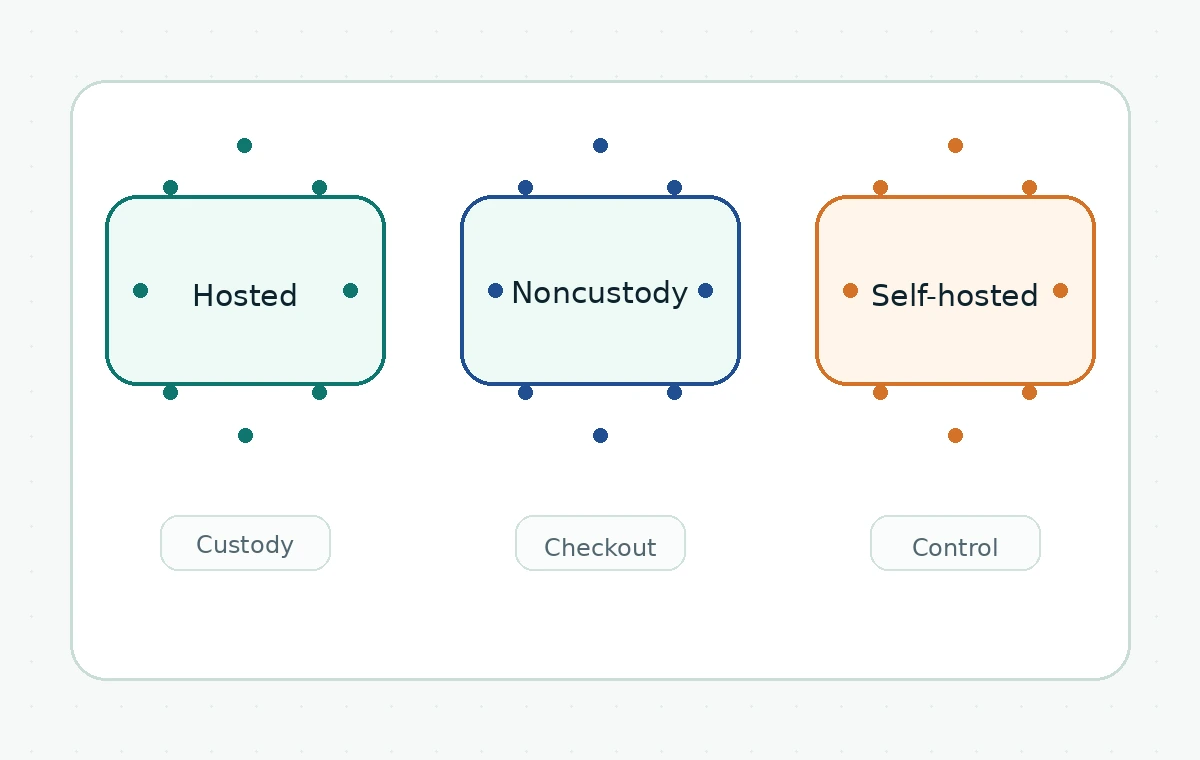
| Model | Payment flow | Buyer KYC likelihood | Merchant burden | Main break point |
|---|---|---|---|---|
| Self-hosted non-custodial | Merchant runs software and receives crypto directly | Lower for buyers | Wallet security, reconciliation, refund process | Operational mistakes and unsupported assets |
| Hosted non-custodial | Provider creates invoices while settlement goes to merchant wallet | Often lower, subject to provider policy | Vendor uptime, invoice rules, activity limits | Policy changes and support issues |
| Custodial processor | Provider receives, stores, converts, or pays out funds | Higher, especially with fiat payout | Verification, payout review, tax documents | Account freezes or delayed settlement |
| Exchange workaround | Merchant routes sales through an exchange account | High and usually unsuitable | Manual reconciliation and terms risk | Account closure and poor audit trail |
A merchant also needs to separate buyer KYC from merchant onboarding. A provider may avoid asking the buyer for identity data while still verifying the merchant’s business, beneficial owners, domain, wallet, or payout account. That is not a contradiction; it is two different risk surfaces.
What checks still matter if checkout is privacy-first?
The checks that still matter are sanctions screening, tax records, suspicious-order handling, refund policy, and custody security. Those topics do not disappear because the checkout form is shorter.
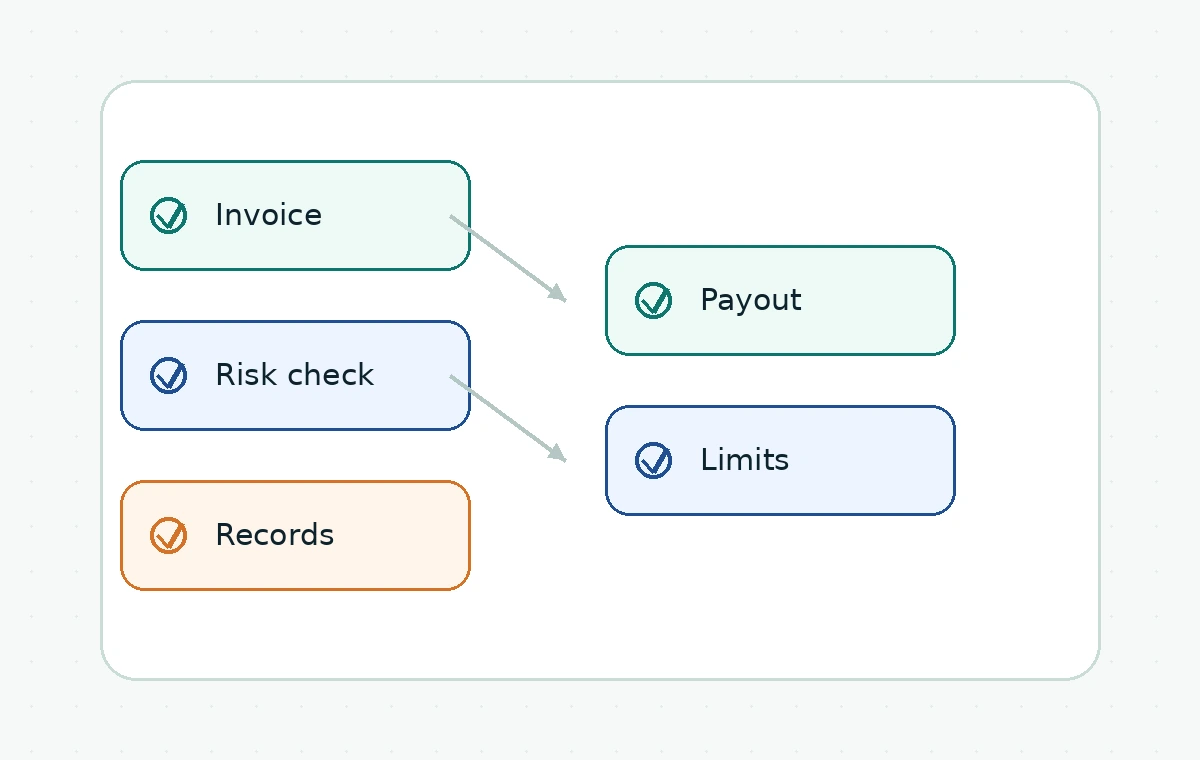
OFAC’s virtual currency sanctions guidance describes a risk-based compliance program with management commitment, risk assessment, internal controls, testing, and training. A small merchant does not automatically become a bank, but it should not treat a short checkout form as a substitute for sanctions review.
The IRS digital assets page states that digital asset income is taxable and that records should document receipt, sale, exchange, disposition, and fair market value in US dollars. The IRS Form 1099-DA page is also relevant when merchants review future broker-reporting workflows. A transaction hash is useful evidence, but it is not the full accounting record.
A minimal merchant launch file should include
- Supported assets and networks, with a reason for each one.
- Wallet custody model and backup procedure.
- Invoice expiry, underpayment, overpayment, and refund policy.
- USD valuation method at the time of payment.
- Suspicious-order escalation notes.
- Accounting export process and responsible owner.
How should a merchant test a no-KYC gateway?
A merchant should test a no-KYC gateway as a limited pilot: one product line, a small set of assets, direct wallet settlement where possible, documented refund rules, and exportable records. The pilot should prove the operational flow before it handles meaningful revenue.
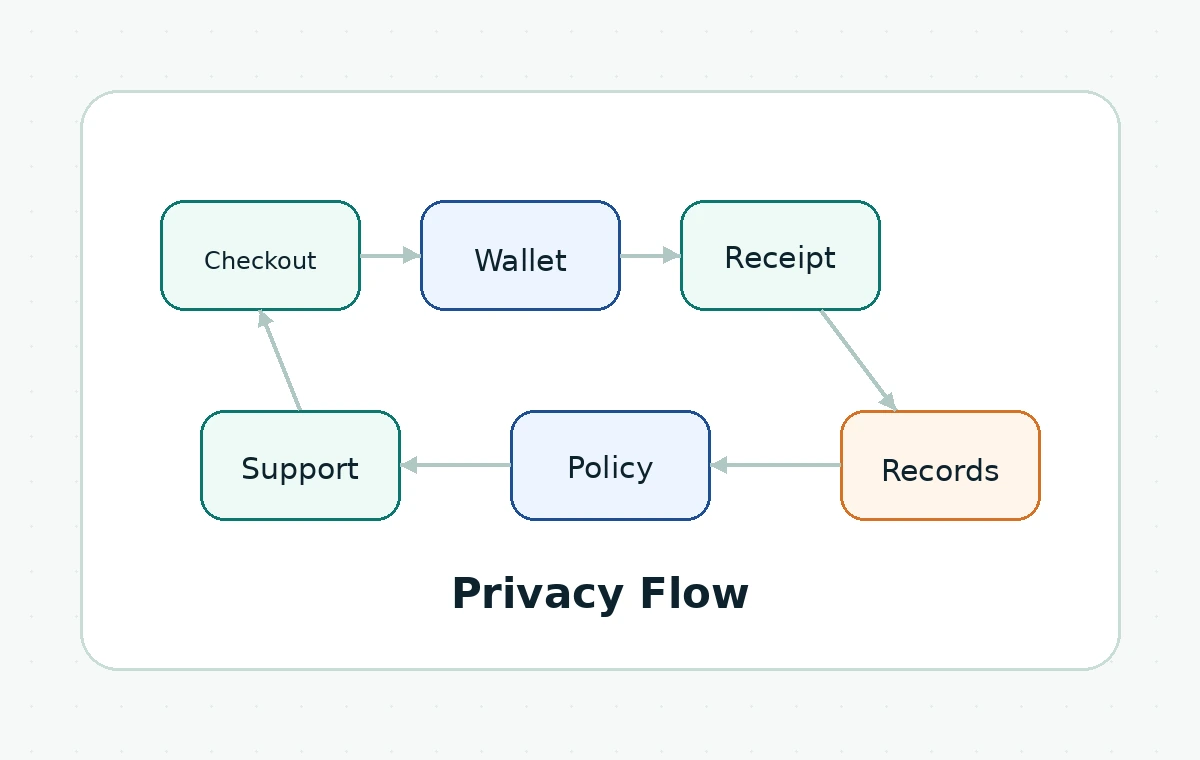
Start with failure cases before marketing the payment method. Test expired invoice, underpayment, overpayment, refund request, duplicate payment, and unsupported network. If those flows are unclear, the KYC question is not the first problem; payment support is.
How should merchants interpret “without KYC” in practice?
Merchants should interpret “without KYC” as a checkout-design claim, not as a full compliance claim. The phrase usually describes whether the customer must submit identity documents before paying, but it does not explain who controls the funds, whether fiat conversion occurs, what records are created, or whether the provider can pause settlement.
The practical entity map is simple: the merchant sells a product, the customer pays an invoice, the gateway coordinates payment instructions, and the merchant receives settlement. Each part creates a different question. The invoice affects checkout friction. The wallet affects custody. The payout route affects verification. The record system affects accounting. The risk process affects blocked or suspicious orders.
This is why a merchant should avoid comparing providers only by headline labels. A hosted checkout may feel privacy-first for the buyer but still include policy limits. A self-hosted checkout may keep funds under the merchant’s control but require more operational discipline. A custodial processor may provide easier reporting and fiat payout, but the trade-off is more verification and more account-control risk.
What records should exist if the buyer is not verified?
If the buyer is not verified at checkout, the merchant still needs enough records to support order fulfilment, refunds, accounting, and dispute handling. The minimum record is not just a transaction hash. A useful record connects the order ID, invoice amount, asset, network, receiving wallet, timestamp, exchange-rate method, fulfilment status, and refund decision.
For US merchants, the tax angle is especially important because crypto received for goods or services can create income and later disposition records. The IRS digital assets guidance emphasizes digital asset reporting and fair market value records, so a merchant should design exports before volume arrives, not after the first accounting problem.
Records also help support teams. Underpayments, overpayments, wrong-chain transfers, and expired invoices are common payment-support cases. If the gateway does not give a clean way to connect a transaction to an order, the merchant may keep buyer friction low while making support slower and riskier.
Useful records for a privacy-first crypto checkout
- Order ID and invoice ID linked to the crypto transaction.
- Asset, network, receiving wallet, and confirmation status.
- USD or local-currency value at the time of payment.
- Invoice expiry, underpayment, overpayment, and refund outcome.
- Internal note for suspicious, high-value, duplicate, or unsupported-network payments.
Where do sanctions and risk checks fit into a no-KYC flow?
Sanctions and risk checks fit around the transaction, provider role, and merchant policy rather than only around a buyer identity form. A no-KYC checkout may avoid collecting passports, but a merchant can still review wallet exposure, blocked jurisdictions, suspicious order patterns, product restrictions, and provider alerts.
The OFAC virtual currency sanctions guidance describes risk-based compliance elements, including risk assessment and internal controls. For a merchant, the practical takeaway is not to over-collect customer data by default; it is to know which transaction patterns need review before shipping goods or releasing digital access.
Risk checks should be proportional. A low-value digital download paid from a normal wallet may need only normal records. A high-value order, a freight-forwarding address, repeated failed payments, a wallet tied to alerts, or a mismatch between order data and payment behavior may need manual review. The key is to define these conditions before the gateway is live.
How do non-custodial and custodial gateways differ for merchants?
Non-custodial gateways usually provide payment instructions while the merchant controls the receiving wallet. Custodial gateways receive, hold, convert, or pay out funds through the provider. That difference changes the merchant’s risk profile more than the “no KYC” label does.
In a non-custodial model, the merchant owns wallet security, backup, reconciliation, and refund execution. In a custodial model, the provider may simplify settlement and reporting, but it can also require identity checks, impose payout limits, or delay withdrawals. Neither model is automatically better; the right choice depends on the merchant’s assets, order size, support capacity, and need for fiat settlement.
| Question | Why it matters | Preferred answer before launch |
|---|---|---|
| Who controls funds? | Custody changes payout risk and provider control. | Merchant wallet for non-custodial pilots, or clear custody terms. |
| Is fiat conversion required? | Fiat payout usually adds verification and reporting steps. | Know whether crypto is held, converted, or paid out. |
| What happens on wrong network? | Wrong-chain payments create support and loss risk. | Document accepted networks and refund limits. |
| Can records be exported? | Accounting and support need order-level evidence. | CSV/API export with order ID, asset, timestamp, and value. |
| When is manual review triggered? | Privacy-first does not mean risk-blind. | Define high-value, suspicious, duplicate, and unsupported cases. |
What should not be promised on a no-KYC gateway page?
A merchant page should not promise anonymity, legal exemption, guaranteed approval, tax avoidance, or sanctions immunity. Those claims are broader than a checkout-flow feature and can create trust and legal problems. The safer explanation is narrower: the checkout can minimize buyer data collection while the merchant still keeps business records and risk controls.
The FinCEN CVC guidance is useful here because it focuses on facts and circumstances. A provider’s label is less important than whether it accepts and transmits value, controls funds, converts assets, or only supplies software. That distinction should be reflected in the page copy and in the merchant’s internal review.
The best content structure is therefore specific, not inflated. It should define the checkout model, explain the custody path, describe records, list risk conditions, compare alternatives, and link sources near the claims they support. That gives readers a useful decision framework and gives search systems a clearer semantic map of the page.
Bottom line: when is a no-KYC gateway useful?
A no-KYC crypto gateway is useful when the goal is checkout data minimization, direct settlement, and lower buyer friction. It is risky when the phrase is used to dodge custody, tax, sanctions, or licensing questions.
The practical answer is to choose the narrowest payment model that solves the actual checkout problem. If you need fiat settlement, expect verification somewhere. If you can receive crypto directly and handle records, a non-custodial model may keep the buyer flow lighter.
FAQ
Is a no-KYC crypto gateway legal for US merchants?
It depends on the facts: custody, transmission, fiat payout, jurisdiction, product type, and provider role. A no-document checkout is not the same as a legal exemption.
Does non-custodial mean no compliance work?
No. Non-custodial settlement can reduce provider custody risk, but the merchant still needs records, refund rules, tax treatment, and risk review.
Can a merchant accept crypto anonymously?
A merchant can minimize buyer data in some checkout flows, but orders, shipping, tax records, support logs, and wallet activity may still identify transaction context.
What is the first thing to check in a provider?
Check whether the provider controls funds, converts to fiat, or only creates invoices. That determines most of the practical risk review.